
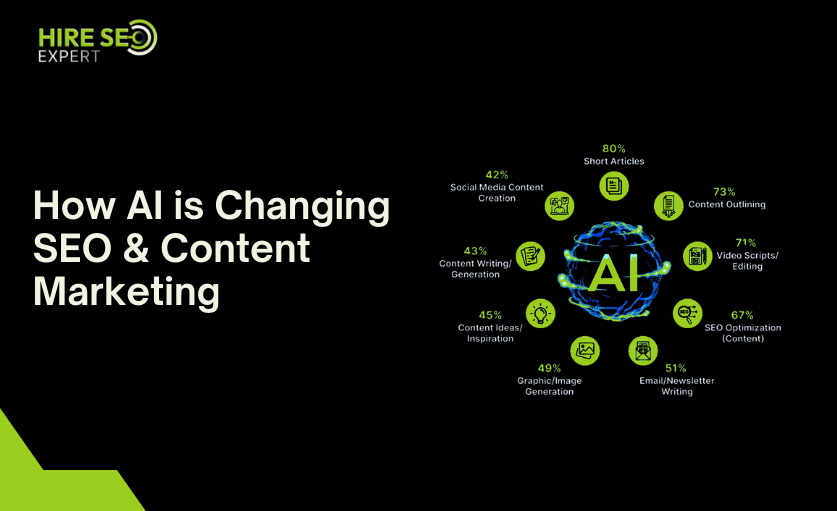
AI in SEO and content marketing is transforming how businesses approach digital marketing strategies. Artificial Intelligence helps marketers analyze data, improve keyword research, and create high-quality content that ranks higher on search engines.
With the help of AI-powered tools, marketers can optimize content faster, understand user intent better, and improve website traffic through smarter SEO strategies.
The Rise of AI in Digital Marketing
Over the past few years, AI has become an essential part of digital marketing strategies. Search engines are using advanced AI algorithms to understand user intent and deliver more relevant search results. As a result, marketers must adapt their SEO strategies to align with these intelligent systems.
AI technologies help marketers process massive amounts of data quickly. Instead of manually analyzing trends and keywords, AI tools can identify patterns, predict search behavior, and provide actionable insights in seconds. This allows businesses to make data-driven decisions that improve their online visibility.
AI-powered platforms are also helping content creators generate ideas, optimize content for search engines, and improve overall content performance.
AI-Powered Keyword Research
Keyword research is one of the most important elements of SEO. Traditionally, marketers had to manually search for keywords and analyze competition levels. AI tools have made this process faster and more accurate.
AI-based keyword research tools can analyze search trends, user intent, and competitor data to recommend the best keywords for your content. These tools can also identify long-tail keywords that have lower competition but high search intent.
By targeting the right keywords, businesses can attract more qualified traffic and increase their chances of ranking higher on search engines.
Content Creation with AI
One of the biggest changes AI has brought to content marketing is automated content creation. AI tools can assist marketers in writing blog posts, product descriptions, email campaigns, and social media captions.
While AI-generated content still requires human editing and creativity, it significantly speeds up the content creation process. Marketers can generate outlines, topic ideas, and drafts in minutes, allowing them to focus on strategy and storytelling.
AI also helps ensure that content is optimized for SEO by suggesting relevant keywords, improving readability, and structuring content properly.
However, it is important to remember that high-quality content still requires a human touch. Search engines prioritize valuable and helpful content that genuinely solves users’ problems.
AI and Search Engine Algorithms
Search engines are becoming smarter thanks to AI and machine learning technologies. Modern search algorithms can understand context, user intent, and content quality better than ever before.
Instead of simply matching keywords, search engines now evaluate factors such as:
- Content relevance
- User engagement
- Content depth
- Website authority
- User experience
This means that businesses must focus on creating high-quality content that provides real value to readers.
AI-driven algorithms also prioritize content that answers specific questions and provides clear solutions. This is why long-form content, detailed guides, and informative blog posts perform well in search rankings.
Content Optimization with AI
AI tools can help optimize content to improve its search engine performance. These tools analyze top-ranking pages and provide recommendations for improving your content.
Some common AI-powered optimization features include:
- Keyword density suggestions
- Content structure improvements
- Readability analysis
- Internal linking recommendations
- Content gap analysis
By following these insights, marketers can create SEO-friendly content that has a higher chance of ranking on search engines.
AI can also help identify topics that competitors have not covered, allowing businesses to create unique and valuable content that stands out.
Personalization and User Experience
AI is also improving how businesses personalize their content for different audiences. Personalized content increases engagement and encourages visitors to spend more time on a website.
AI tools analyze user behavior, browsing patterns, and search history to recommend relevant content to each visitor. This creates a more tailored experience and increases the likelihood of conversions.
For example, AI-powered recommendation engines can suggest blog posts, products, or services that match a user’s interests.
Improving user experience is also a key ranking factor for search engines. Websites that provide helpful, relevant, and engaging content are more likely to rank higher in search results.
Predictive Analytics and Content Strategy
Another powerful benefit of AI is predictive analytics. AI tools can forecast trends, identify emerging topics, and help marketers plan future content strategies.
By analyzing historical data and current search trends, AI can predict which topics will become popular. This allows businesses to create content before their competitors and capture early search traffic.
Predictive analytics also helps marketers understand what type of content performs best with their audience. With this data, businesses can continuously refine their content strategy to maximize results.
Voice Search and AI
Voice search is growing rapidly as more people use smart devices and virtual assistants. AI plays a key role in understanding voice queries and delivering accurate results.
Voice searches are usually more conversational than traditional text searches. This means content must be optimized for natural language and question-based queries.
Marketers should focus on creating content that answers common questions clearly and directly. Including FAQ sections and conversational keywords can improve the chances of appearing in voice search results.
The Future of AI in SEO and Content Marketing
AI will continue to play an even bigger role in SEO and content marketing in the coming years. As technology evolves, AI tools will become more advanced, providing deeper insights and more efficient automation.
However, successful digital marketing will always require a balance between technology and human creativity. AI can assist with research, analysis, and optimization, but human expertise is still essential for storytelling, brand voice, and strategic decision-making.
Businesses that embrace AI while maintaining authentic and valuable content will have the greatest advantage in search rankings.
Conclusion
Artificial Intelligence is transforming SEO and content marketing in many ways. From smarter keyword research to automated content optimization and predictive analytics, AI is helping marketers create more effective digital strategies.
By leveraging AI tools, businesses can improve their content quality, understand their audience better, and increase their chances of ranking higher in search engines.
The key to success is using AI as a support tool while focusing on creating valuable, engaging, and user-focused content. As search engines become more intelligent, businesses that prioritize helpful and high-quality content will continue to grow their online visibility and attract more organic traffic.